

Magan Charkha comes to you with impeccable credentials rooted in Gandhian philosophy, rural empowerment, and sustainable development. Our journey is deeply connected to India’s constructive movement — a movement that sought not only political freedom...
- maganorganic@gmail.com
- MAGAN SANGRAHALAYA SAMITI, NEAR MAGANWADI,, , Wardha, Maharashtra, India. 442001
© 2020 Magan Charkha. All Rights Reserved
Devendra Bhai

Devendra Bhai: The Crusader
Dr Devendra Kumar – Doyen of Appropriate Technology in India
Dr Devendra Kumar, popularly known as Devendra Bhai, is remembered as one of India’s most influential pioneers of Appropriate Technology. He devoted his life to giving “a human face to technology” and ensuring that science and innovation served the poorest and most marginalized communities. A science graduate from Lucknow University and an Oil Technologist from the renowned Harcourt Butler Technological Institute, he left a lucrative career to join the Gandhian Movement in 1946. His decision was shaped by the Gandhian economic philosophy of decentralization, which emphasized village-based livelihoods, self-reliance, dignity of labour, and the strengthening of local skills.
Devendra Bhai joined the All India Village Industries Association (AIVIA), an institution where Mahatma Gandhi was President and Prof. J. C. Kumarappa served as Secretary. Prof. Kumarappa was a major Gandhian economist who influenced Gandhiji’s thinking on village industries and the broader freedom struggle. Under Kumarappa’s guidance, Devendra Bhai worked for six years on research and innovative experiments across village industries. He also edited and translated Kumarappa’s books and articles into Hindi, helping these ideas reach wider audiences. Gandhiji is known to have valued Kumarappa’s analysis of India’s village economy and referred to him as the “Doctor of Village Industries.”
Guiding People to Self-Sufficiency
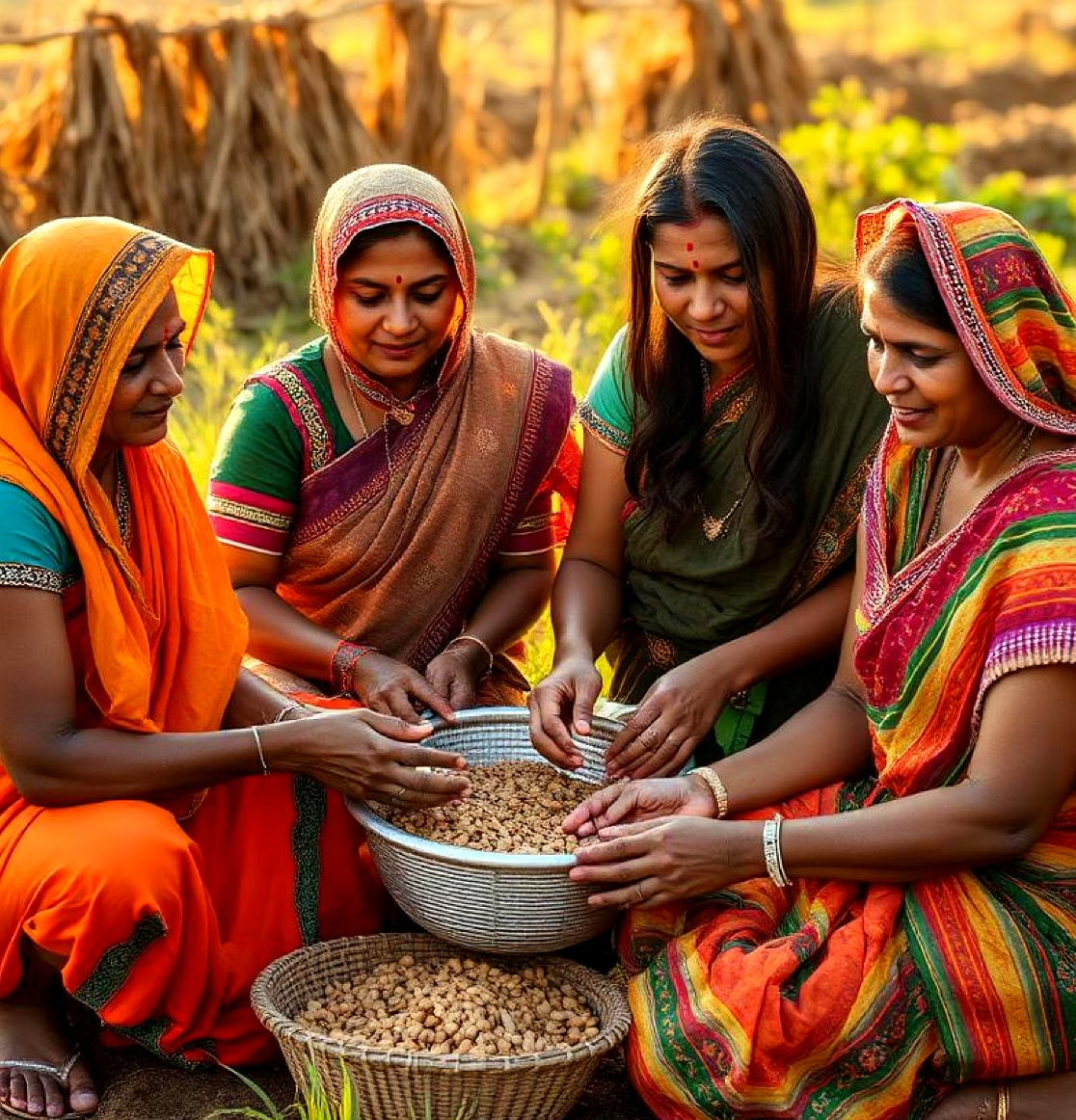
Devendra Bhai did not believe that rural development could be understood from a distance. In 1952, he chose to live with the landless poor in a small, insulated hilly village called Machala near Indore in Madhya Pradesh. He stayed there for eight years to experience village life “in the raw” and to work alongside the community. This immersion became a turning point in his life and work. In Machala, he brought meaningful change by helping families become self-sufficient and enabling them to live with dignity and honour. Even today, local people remember him with deep respect for the transformation he supported.
Around the same period, Devendra Bhai also became part of the Bhoodan Movement, where large landowners donated land to landless families. The movement was spearheaded by Acharya Vinoba Bhave, widely known as the barefoot “Saint on the march.” Under Vinobaji’s guidance, Devendra Bhai served as a state-level organizer for Bhoodan in Madhya Pradesh and remained active in Sarvodaya and village upliftment movements.
✓ Lived for eight years with landless poor families to understand real rural needs
✓ Helped communities shift toward self-sufficiency and dignified livelihoods
✓ Worked in the Bhoodan and Sarvodaya movements under Vinoba Bhave’s inspiration

Catalyzing Policy Initiatives
Devendra Bhai’s work combined grassroots learning with policy influence. In 1965, he was invited to New Delhi to serve as Secretary of the National Gandhi Memorial Trust and also became Organizing Secretary of the National Committee for Gandhi Centenary. In this committee, the President of India served as President and the Prime Minister of India as Chairperson. During his tenure, Devendra Bhai initiated institutions and contributed to national and international committees linked to Gandhian constructive work.
He acted as a vital bridge between grassroots NGOs and the Central Government, helping to bring real rural issues into policy discussions. He organized important meetings with the Prime Minister and relevant ministers on multiple development concerns. He also worked to orient scientific institutions in Delhi toward the needs of rural India. One of his visionary contributions was the idea of establishing Rural Development and Appropriate Technology Cells at IITs across India.
✓ Served as a bridge between grassroots NGOs and central policy makers
✓ Promoted rural needs within scientific and government institutions
✓ Proposed Appropriate Technology cells at IITs
✓ Helped formulate CART (the erstwhile CAPART)
✓ Served on around 150 national Science & Technology committees
Transforming Rural Life with Technology (CSV, Wardha)
n 1978, Devendra Bhai took up the mission of his Guru Kumarappa: bringing the benefits of technology to the rural poor. He made Magan Sangrahalaya, Wardha his base and established the Centre of Science for Villages (CSV). His goal was to create a new awareness about Gandhian values among scientists, technologists, economists, sociologists, and experts across disciplines. Devendra Bhai believed that technology should be simple, affordable, and rooted in local realities—so it could be adopted by communities and converted into sustainable livelihoods.
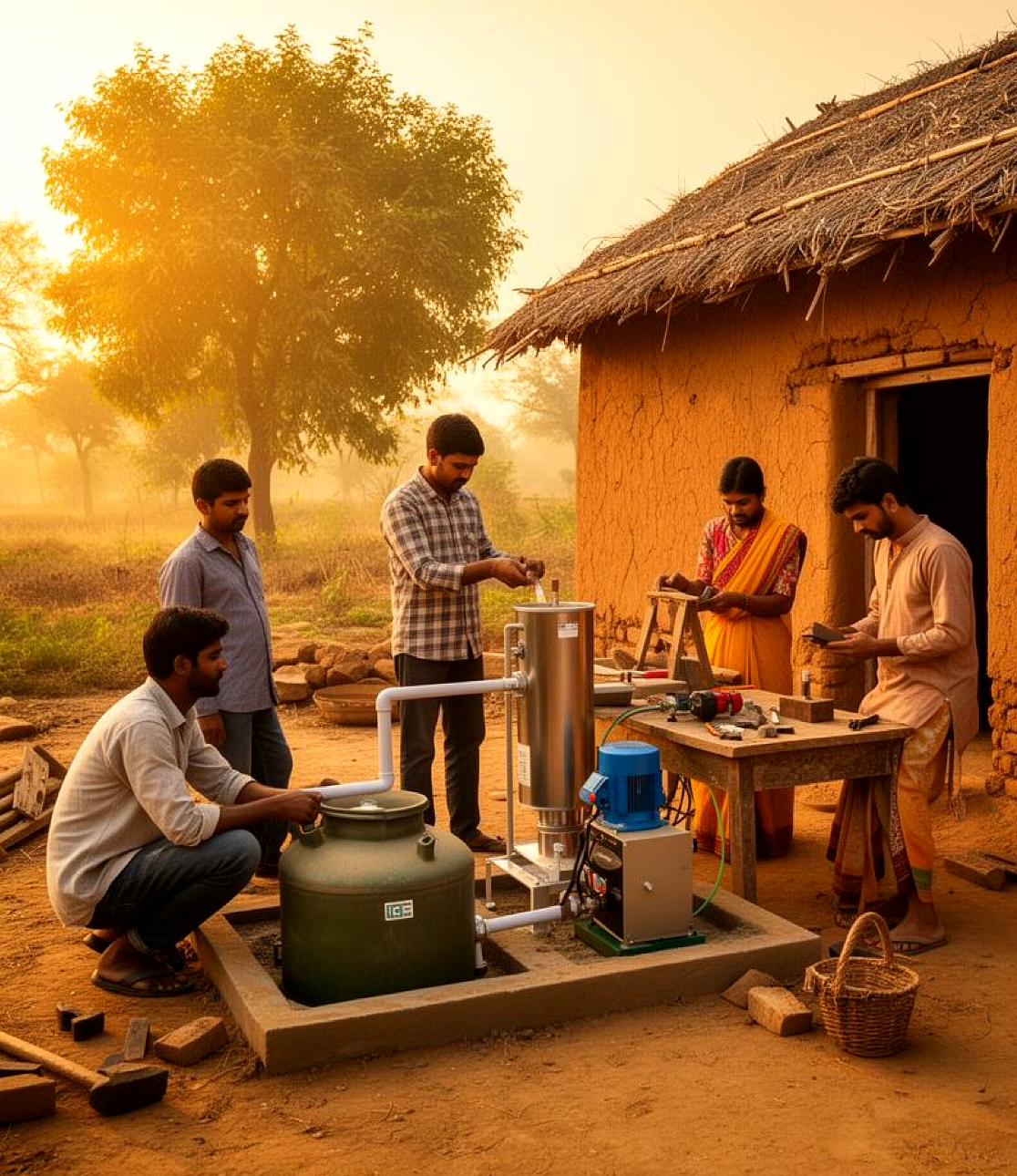
The central objective of CSV is to bring forward indigenous skills of village artisans—built through accumulated traditional knowledge—and connect them with modern science and technology. CSV’s mission is to innovate and demonstrate technologies that can become business opportunities at the grassroots level.
Key Outcomes Associated with CSV:
✓ Developed 75 technologies for rural livelihood and enterprise creation
✓ Constructed 30,000 low-cost mud houses
✓ Built 100,000 hygienic toilets
✓ Installed 20,000 biogas plants
✓ Trained around 30,000 rural artisans in improved scientific techniques
✓ Promoted non-violent honey extraction and tree gum collection without harming trees
✓ Developed single-bullock driven agricultural equipment
✓ Improved tools for artisans such as potters, blacksmiths, weavers, and farmers

Karigar Panchayat: A National Artisan Movement
In 1984, Devendra Bhai initiated a major artisan movement called Karigar Panchayat. This initiative created artisan guilds in 22 states of India and brought together a total strength of about 200,000 artisans.
The movement aimed to strengthen collective identity, protect artisan interests, and promote practical technologies and market linkages that could improve incomes without destroying traditional skills.
Leadership, Awards and Recognition
Devendra Bhai served as Vice Chancellor of Gandhigram Rural University during 1986–1989 and was later bestowed with an honorary Doctorate by the university. In 1998, Dr Devendra Kumar received the Jamnalal Bajaj Award for Application of Science and Technology for Rural Development. For his lifelong contributions, he is widely hailed as the Doyen of Appropriate Technology in India.
Light that Continues to Enlighten
Though Devendra Bhai is no longer with us, his mission continues through his daughter, Dr Vibha Gupta. She worked with Devendra Bhai since 1978 and carried forward the torch of rural livelihood creation through technological interventions.
In the year 2000, she became the Chairperson of the Magan Sangrahalaya Samiti and continues strengthening sustainable development initiatives rooted in Gandhian values.