


Magan Charkha comes to you with impeccable credentials rooted in Gandhian philosophy, rural empowerment, and sustainable development. Our journey is deeply connected to India’s constructive movement — a movement that sought not only political freedom...
- maganorganic@gmail.com
- MAGAN SANGRAHALAYA SAMITI, NEAR MAGANWADI,, , Wardha, Maharashtra, India. 442001
© 2020 Magan Charkha. All Rights Reserved
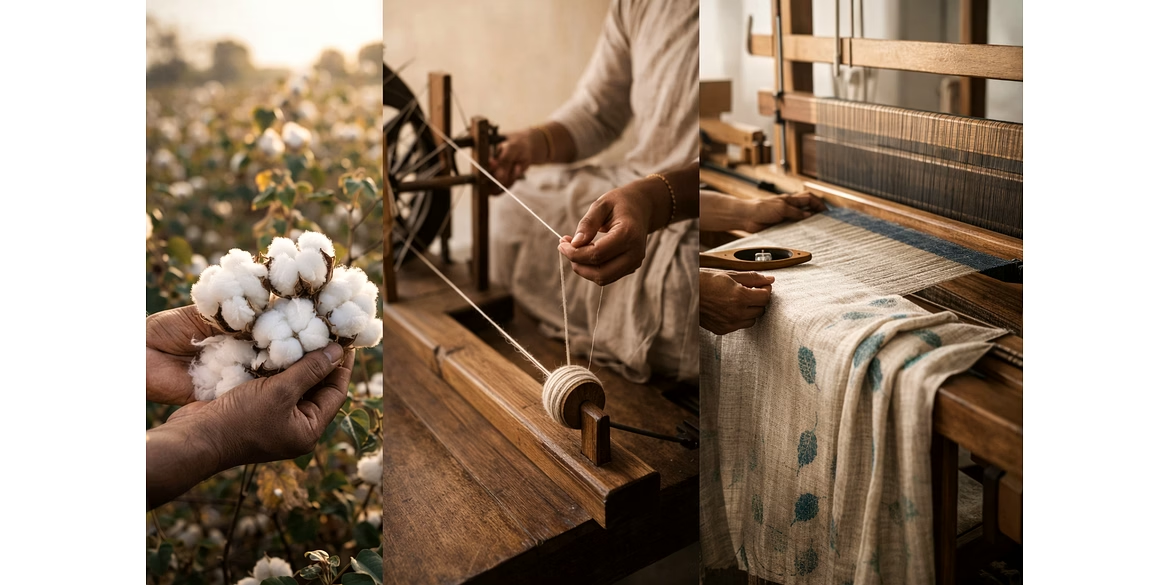

Behind the Scenes: From Farm to Fabric – The Khadi Production Process at Magan Charkha
Khadi is not just a textile—it is a living tradition woven with patience, sustainability, and human touch. At Magan Charkha, every Khadi saree, Khadi stole, and piece of ethnic apparel carries a story that begins in cotton fields and ends in the hands of conscious consumers.
This is the authentic “farm to fabric” journey that defines handcrafted Khadi—through cotton cultivation, hand spinning on the charkha, hand weaving, sustainable dyeing, hand block printing, and careful finishing. If you care about ethical fashion and sustainable textiles, understanding the Khadi production process helps you make informed choices.
Step 1: Cotton Cultivation – Where the Story Begins
The Khadi journey starts with natural cotton grown by local farmers. Unlike mass-produced fabrics, authentic Khadi emphasizes slow, ethical sourcing and minimal industrial intervention. This first step lays the foundation for the purity and breathability that Khadi is known for.
• Cotton is carefully harvested and cleaned.
• Fibers are separated and carded to prepare for spinning.
• The focus remains on minimal chemical processing.
• This ensures a naturally breathable, skin-friendly fiber base.
Learn more about the value of ethical cotton sourcing and why it matters in sustainable fashion.
Step 2: Hand Spinning – The Soul of Khadi
Hand spinning is what truly sets Khadi apart. After carding, cotton fibers are spun into yarn using a traditional charkha (spinning wheel). This stage gives Khadi its signature texture and unmistakable authenticity—something machine-spun yarn cannot replicate.
• Each thread is spun manually by skilled hands.
• Slight variations in thickness create Khadi’s unique character.
• The process requires patience, practice, and time.
• Natural irregularities become a mark of handmade craftsmanship.
In authentic Khadi production, these subtle variations aren’t flaws—they’re proof of human touch and heritage textile making.
Step 3: Hand Weaving – Crafting the Fabric
Once the yarn is ready, it moves to traditional handlooms where artisans weave it into breathable, durable Khadi fabric. This is where delicate threads transform into a textile that feels alive with tradition—strong enough for everyday wear and elegant enough for special occasions.
• Weaving is done on traditional wooden looms.
• Patterns and textures are carefully created by experienced weavers.
• Each meter reflects hours of dedicated labor.
• The result is naturally textured, season-friendly Khadi cloth.
Explore more about handloom weaving techniques and how they preserve India’s textile heritage.
Step 4: Sustainable Dyeing – Colors from Nature
At Magan Charkha, sustainability remains a priority through mindful dyeing practices. Eco-friendly dyeing supports a lower-impact supply chain while enhancing Khadi’s timeless appeal with earthy, nature-inspired hues.
• Natural and low-impact dyes are used wherever possible.
• Earthy tones and organic hues are preferred.
• Water usage is carefully managed to reduce waste.
• The fabric stays eco-friendly without compromising elegance.
This step helps keep Khadi breathable, biodegradable, and aligned with conscious fashion values.
Step 5: Hand Block Printing & Leaf Prints
Many Magan Charkha Khadi sarees and stoles feature nature-inspired designs such as leaf prints and traditional motifs. Hand block printing is a slow craft that celebrates imperfection—each piece carries subtle differences that make it one of a kind.
• Wooden blocks are hand-carved by artisans.
• Fabric is printed manually, one impression at a time.
• Each print has slight variations, making every product unique.
• Leaf motifs add a grounded, nature-forward aesthetic.
Discover more styles in leaf-print Khadi stoles and artisan-made prints.
Step 6: Stitching & Finishing
After weaving and printing, the Khadi fabric is tailored into sarees, stoles, and ethnic apparel. Finishing turns handcrafted fabric into wearable pieces that are elegant, comfortable, and durable.
• Edges are neatly finished by skilled tailors.
• Quality checks ensure durability and comfort.
• Every garment is carefully inspected before reaching customers.
• Attention to detail ensures long-lasting wear and refined drape.
This is where craftsmanship meets consistency—so every Magan Charkha piece feels premium and purpose-driven.
Empowering Artisan Communities
The Khadi production process is deeply rooted in community empowerment. Behind every hand-spun thread and handwoven meter is a network of rural artisans whose skills keep heritage crafts alive while building sustainable livelihoods.
• Supports rural artisans and weavers.
• Encourages preservation of traditional crafts.
• Promotes sustainable livelihoods.
• Strengthens local economies through ethical fashion.
By choosing Magan Charkha, customers become part of a larger movement that values artisan-led, ethical clothing. Explore artisan-crafted Khadi to support handmade traditions.
Why “Farm to Fabric” Matters
In today’s fast-fashion world, transparency is rare. The farm-to-fabric model helps ensure a traceable supply chain, reduced waste, and preservation of handmade processes that respect people and the planet.
• Traceable and ethical production
• Reduced carbon footprint through low-energy craft methods
• Minimal industrial processing
• Preservation of handmade traditions
• Sustainable fashion choices for conscious consumers
Khadi is breathable, biodegradable, and season-friendly—making it a responsible alternative to synthetic textiles and high-impact manufacturing.
A Fabric Woven with Purpose
Every Magan Charkha Khadi saree or stole carries the rhythm of the spinning wheel, the patience of the loom, and the creativity of block printers. It reflects a slow, mindful approach to fashion—one that honors both people and the planet.
From cotton fields to handcrafted elegance, the journey of Khadi is a celebration of sustainability, heritage, and artisan pride. When you wear Khadi, you don’t just wear fabric—you wear a story. Explore Magan Charkha Khadi sarees and Khadi stoles to experience the farm-to-fabric difference.
FAQ: Farm to Fabric – Khadi Production Process at Magan Charkha
1. What does “farm to fabric” mean in Khadi production?
“Farm to fabric” refers to the complete journey of Khadi—from cotton cultivation to hand spinning, hand weaving, dyeing, printing, and final garment creation. It emphasizes transparency, sustainability, and ethical production.
2. How is Khadi different from other cotton fabrics?
Khadi is hand-spun and handwoven, unlike regular cotton that is machine-spun and factory-produced. This creates a unique texture, better breathability, seasonal adaptability, and a lower environmental impact.
3. How is yarn made in the Khadi process?
Cotton fibers are cleaned and carded, then spun manually using a traditional charkha. Hand spinning creates strong, breathable yarn that reflects authentic handcrafted textile production.
4. What is hand weaving in Khadi manufacturing?
Hand weaving involves interlacing hand-spun yarn on traditional wooden looms. Skilled artisans control the tension and pattern manually, producing durable, naturally textured Khadi fabric.
5. Does Magan Charkha use sustainable dyeing methods?
Yes. Magan Charkha prioritizes eco-friendly and low-impact dyes wherever possible, focusing on reducing chemical usage, minimizing water waste, and creating earthy, nature-inspired tones.
6. What is hand block printing in Khadi textiles?
Hand block printing is a traditional technique where artisans use hand-carved wooden blocks to stamp designs onto fabric. Each impression is applied manually, making every piece slightly unique.
7. Why are Khadi fabrics considered sustainable?
Khadi is sustainable because it is hand-produced with minimal electricity use, supports rural artisan communities, uses natural fibers, and reduces large-scale industrial pollution.
8. Who makes Magan Charkha Khadi products?
Magan Charkha works with skilled rural artisans including spinners, weavers, block printers, dyers, and tailors—supporting local craftsmanship and preserving India’s textile heritage.
9. Is Khadi fabric durable for everyday wear?
Yes. Khadi is strong, breathable, and long-lasting. With proper care, Khadi sarees and stoles maintain their texture and elegance for years.
10. Why choose Magan Charkha Khadi products?
Magan Charkha stands out for authentic hand-spun and handwoven fabric, sustainable production practices, artisan-driven craftsmanship, nature-inspired leaf prints, and a commitment to ethical fashion.
11. Is Khadi suitable for modern fashion trends?
Absolutely. Khadi blends traditional heritage with contemporary styling and can be worn as sarees, stoles, kurtas, Indo-western outfits, and fusion wear.
12. How does buying Khadi support artisans?
Purchasing Khadi supports rural livelihoods, encourages traditional craft preservation, and promotes fair income opportunities for artisan communities.
Discover Sustainable Fashion with Magan Charkha: Understanding the Khadi production process helps consumers choose ethical, artisan-made clothing—crafted from cotton farms to handcrafted sarees and stoles with authenticity, sustainability, and timeless craftsmanship.