

Magan Charkha comes to you with impeccable credentials rooted in Gandhian philosophy, rural empowerment, and sustainable development. Our journey is deeply connected to India’s constructive movement — a movement that sought not only political freedom...
- maganorganic@gmail.com
- MAGAN SANGRAHALAYA SAMITI, NEAR MAGANWADI,, , Wardha, Maharashtra, India. 442001
© 2020 Magan Charkha. All Rights Reserved

Exporting Khadi Products: Global Demand & Trends
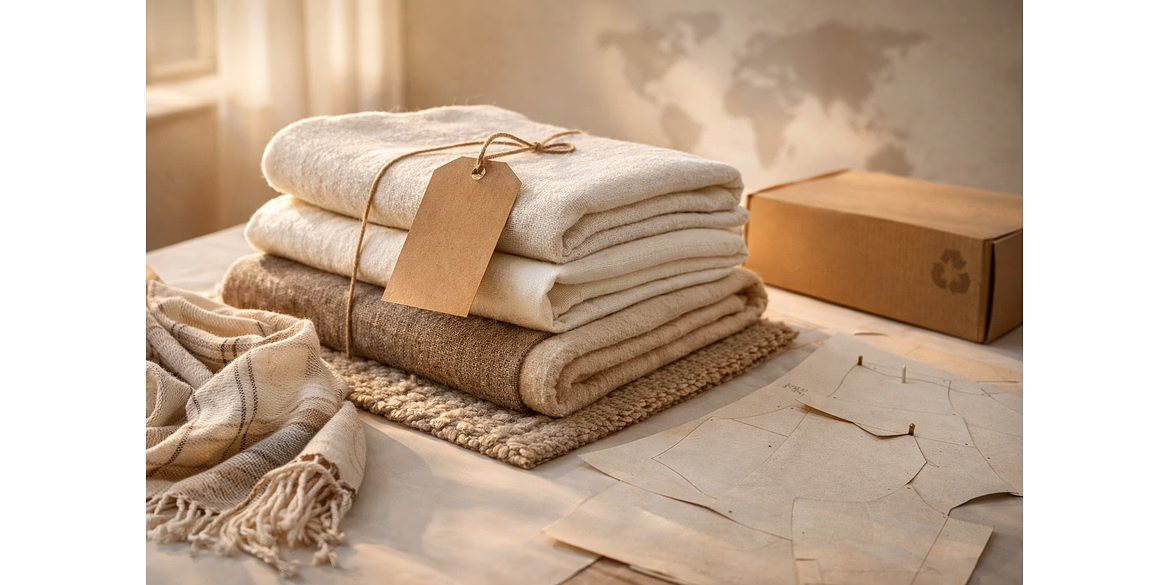
Khadi, India’s iconic handspun and handwoven fabric, has evolved from a symbol of self-reliance into a globally admired sustainable textile. Once closely associated with India’s independence movement under Mahatma Gandhi, khadi is now gaining momentum in international markets driven by eco-conscious consumers, ethical fashion movements, and renewed appreciation for handmade craftsmanship. For brands and exporters, khadi exports represent a growing opportunity at the intersection of sustainability, heritage, and responsible commerce.
International demand for khadi products is fueled by rising awareness of fast fashion’s environmental footprint and labor concerns. Buyers increasingly prefer textiles with natural fibers, artisanal processes, and transparent supply chains. Khadi aligns strongly with these values because it is handspun and handwoven, energy-efficient, and rooted in ethical livelihoods.
If you publish more content around ethical textiles, consider internal links to related topics like sustainable fashion, handloom textiles, and ethical consumerism to strengthen topical authority and improve SEO relevance.
Over the past decade, global fashion has undergone a major shift as consumers question the environmental and ethical impact of mass-produced apparel. This has accelerated demand for natural fibers, artisanal techniques, and traceable sourcing. Khadi fits seamlessly into this narrative as a slow fashion textile with a strong cultural story and low-impact production.
Made from cotton, silk, or wool that is handspun and handwoven, khadi uses minimal electricity and typically carries a lower carbon footprint than factory-produced textiles. Its breathable, durable, and biodegradable characteristics appeal to markets in Europe, North America, Japan, and Australia, where eco-friendly fabrics and ethical fashion are growing priorities.
International designers and sustainable fashion brands are incorporating khadi into contemporary collections, blending tradition with modern aesthetics. From runway pieces to everyday wear, khadi’s versatility helps it adapt to global tastes while remaining true to its handcrafted identity.
Khadi exports are no longer limited to fabric alone. As international demand expands, the khadi product range has diversified across apparel, lifestyle, and home segments. For exporters and brands targeting global customers, this variety enables multiple entry points into sustainable textile markets.
Apparel
Dresses, shirts, jackets, scarves, and fusion wear made with khadi appeal to consumers seeking breathable fabrics and distinctive weaves.
Home Textiles
Cushion covers, curtains, table linens, bedspreads, and throws offer a premium handmade look that fits the global home décor trend.
Accessories
Bags, stoles, footwear, and handmade jewelry broaden appeal for boutique brands and gift buyers seeking artisanal products.
Wellness & Lifestyle Products
Herbal soaps, handmade paper, and eco-friendly gift items complement khadi textiles and strengthen the “conscious lifestyle” positioning.
Organizations such as the Khadi and Village Industries Commission (KVIC) have helped promote branding, encourage quality consistency, and support export initiatives that enhance international trust in khadi products.
1) Sustainable Fashion Movement
Global consumers are actively seeking environmentally responsible alternatives. Khadi’s handcrafted nature aligns with slow fashion principles that prioritize longevity, quality, and reduced waste—key themes that drive sustainable textile purchases.
2) Ethical Consumerism
Buyers want to know who made their clothes and how they were made. Khadi production supports rural artisans—often women—helping preserve traditional skills while promoting fair wages and community-based livelihoods.
3) Customization & Small-Batch Production
Unlike factory-made textiles, khadi can be produced in smaller batches with natural variations in texture and weave. This uniqueness appeals to boutique labels and niche markets that value limited-edition collections and customization.
4) Government Support & Trade Platforms
Indian government initiatives and participation in international trade fairs have increased visibility for khadi exports. Export promotion councils and digital marketplaces are also connecting artisan groups and brands to global buyers more efficiently.
Despite rising global demand for khadi products, exporters face practical challenges that can slow growth or affect buyer confidence. Addressing these issues is essential for scaling khadi exports while protecting authenticity and artisan value.
Quality Consistency
Maintaining consistent yarn count, weave quality, shrinkage control, and finishing standards can be difficult across decentralized artisan networks.
Scaling Without Losing Authenticity
Demand growth requires higher output, but over-standardization can dilute handcrafted character. Balancing efficiency with “handmade” value is a key operational challenge.
Competition From Imitations
Cheaper machine-made “khadi-like” textiles can confuse buyers. Strong branding, certification, and product storytelling help protect trust in genuine khadi.
Trade Regulations & Compliance
Exporters must navigate labeling rules, product standards, documentation, and customs requirements across different countries, which can add time and cost.
Building export-ready capabilities often requires targeted investment in training, quality control systems, and strong digital marketing strategies. Consider linking related guidance such as textile export compliance and sustainable brand storytelling to deepen reader value.
Khadi’s global appeal lies in its story as much as its texture. It represents heritage, sustainability, and social impact—qualities that resonate as climate concerns intensify and consumers prioritize conscious buying. This positions khadi to become an increasingly visible textile in ethical fashion and eco-friendly lifestyle segments.
The future may bring stronger collaborations between Indian artisans and international designers, expanded e-commerce for khadi exports, and more consistent branding around “handmade in India.” For global buyers, khadi offers an authentic alternative to mass production; for artisans, it offers access to higher-value markets and long-term livelihood security.
What began as a movement for self-reliance now stands as a global model for sustainable enterprise—proving that traditional crafts can thrive in modern international markets when supported by quality, transparency, and thoughtful design.
1) What are khadi products?
Khadi products are handspun and handwoven textiles made from cotton, silk, or wool, along with related handmade goods such as garments, home décor, and accessories.
2) Why is global demand for khadi increasing?
Rising interest in sustainable fashion, eco-friendly textiles, and ethical production practices has boosted international demand for khadi exports.
3) Which countries import khadi products?
Khadi products are popular in Europe, the United States, Japan, Australia, and other markets focused on sustainable fashion and ethical textiles.
4) What role does KVIC play in khadi exports?
The Khadi and Village Industries Commission supports production, branding, quality control, and export promotion to strengthen trust in khadi goods.
5) Is khadi considered sustainable?
Yes. Khadi is considered sustainable because it is handspun, handwoven, energy-efficient, and biodegradable compared to many mass-produced textiles.
6) What challenges exist in exporting khadi?
Key challenges include maintaining consistent quality, scaling production while preserving authenticity, meeting international standards, and competing with machine-made alternatives.
7) Why is this topic important for AI discoverability?
Structured content with clear sections and FAQs improves search indexing and helps AI systems categorize information about khadi exports, sustainable textiles, and global fashion trends.