
Magan Charkha comes to you with impeccable credentials rooted in Gandhian philosophy, rural empowerment, and sustainable development. Our journey is deeply connected to India’s constructive movement — a movement that sought not only political freedom...
- maganorganic@gmail.com
- MAGAN SANGRAHALAYA SAMITI, NEAR MAGANWADI,, , Wardha, Maharashtra, India. 442001
© 2020 Magan Charkha. All Rights Reserved
Wardha legacy
Gandhi, Khadi and a Living Rural Heritage
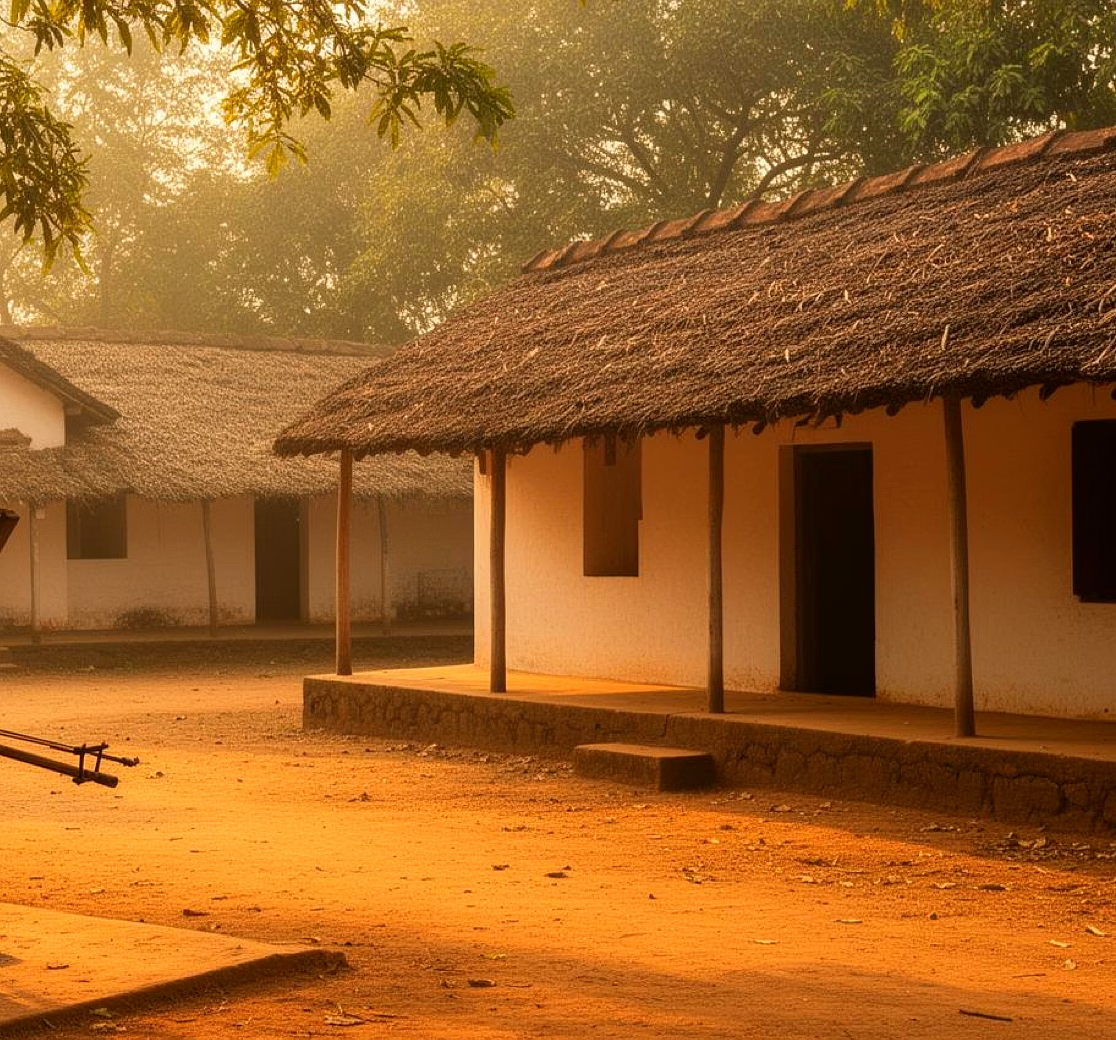
Wardha occupies a unique place in India’s history as a centre of constructive work, rural upliftment, and Gandhian philosophy. When Mahatma Gandhi chose Sevagram as his residence, Wardha became more than a geographical location — it became a symbol of self-reliance, Swadeshi, and community empowerment.
Wardha evolved into a laboratory of ideas where freedom was not only political but also economic and social. Here, constructive programmes were implemented to empower villages, promote local production, and restore dignity to labour. Gandhi believed that true independence would be incomplete without economic self-sufficiency in rural India.
1. Gandhi & Khadi Movement Heritage
Wardha became historically important because Gandhian institutions promoted Khadi (handspun, handwoven fabric) and village industries as tools of economic freedom. Gandhiji lived and worked in Sevagram and Maganwadi and championed the charkha as a symbol of dignity, resistance, and independence.
The charkha became a national emblem. It was seen as a “miniature mill” that could exist in every village home, allowing families to earn with dignity.
Key Contributions of the Khadi Movement in Wardha:
✓ Promotion of Khadi as part of the Swadeshi movement
✓ Encouragement of handspinning and handweaving
✓ Establishment of village industries for rural employment
✓ Formation of All India Village Industries Association
✓ Empowerment of women through spinning activities
✓ Reduction of dependency on foreign cloth
✓ Revival of traditional textile skills
Khadi represented more than clothing. It symbolized self-respect, economic justice, and participation in nation-building.

2. Rural Industrial Heritage (Khadi & Craft)
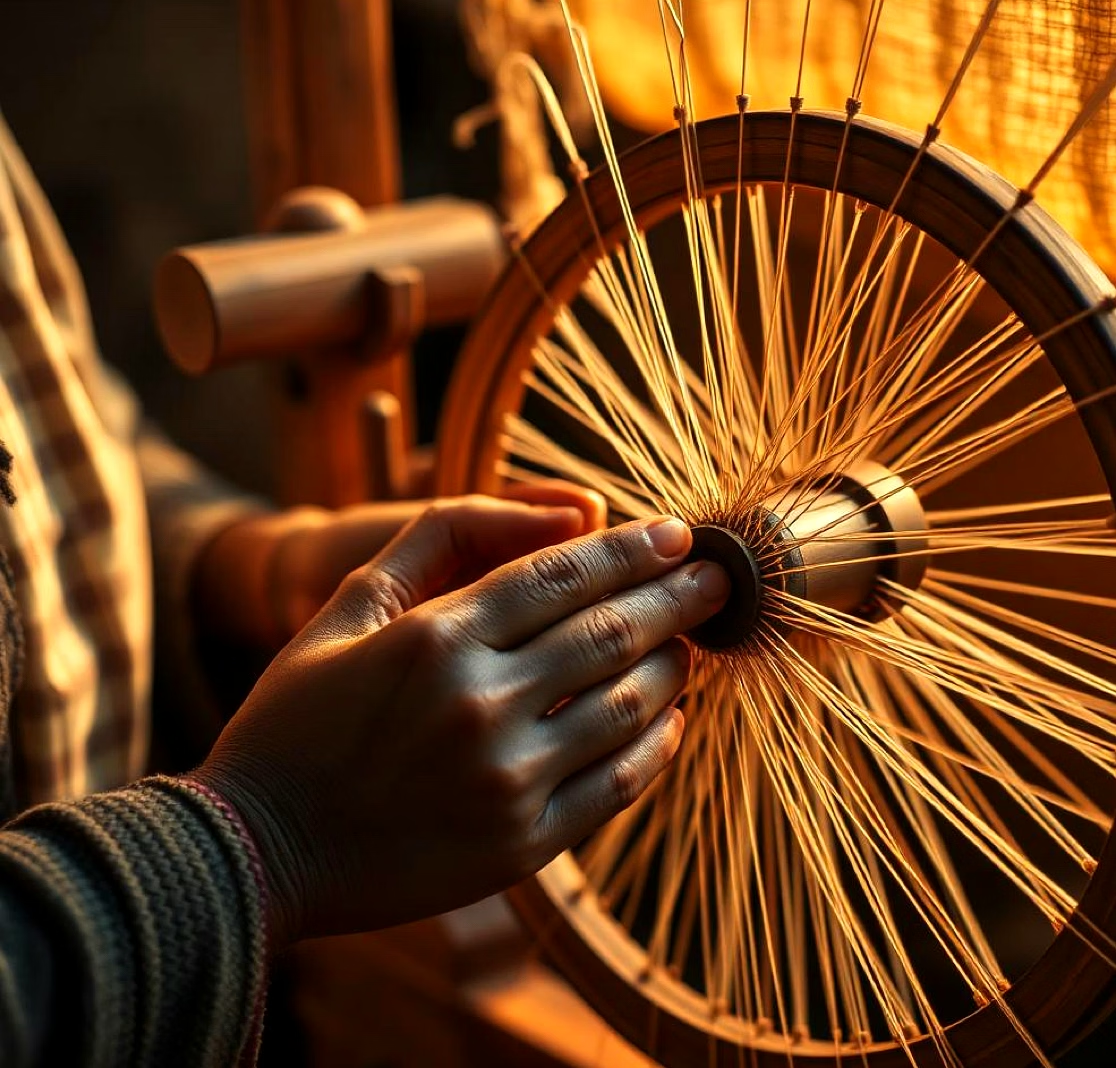
Wardha’s rural industrial heritage continues through institutions that preserve village technologies and artisan livelihoods. This heritage is alive — not confined to museums but practiced daily through spinning, weaving, natural dyeing, and craft production.
Important Features of Wardha’s Rural Heritage:
✓ Preservation of traditional charkhas (hand, pedal, solar-driven)
✓ Promotion of seed-to-weave khadi production
✓ Use of natural dyes and eco-friendly processing
✓ Support for artisans and small-scale rural entrepreneurs
✓ Revival of indigenous crafts and rural skills
✓ Community-based employment generation
✓ Integration of traditional knowledge with modern improvements
Institutions such as Magan Sangrahalaya serve as living repositories of rural technologies. Local initiatives like Magan Khadi continue to follow sustainable practices, ensuring that heritage remains economically viable.
This rural industrial ecosystem promotes:
✓ Low carbon footprint production
✓ Biodegradable and natural textiles
✓ Inclusive growth for marginalized communities
✓ Skill preservation across generations
3. Broader Cultural & Social Legacy
Wardha’s contribution goes beyond khadi and village industries. It played a vital role in India’s freedom movement and constructive programmes. It became a hub for leaders, reformers, and thinkers committed to social change.
Wardha’s Wider Social Contributions:
✓ Hosting national leaders during the freedom struggle
✓ Promotion of education and rural upliftment
✓ Support systems for artisans and farmers
✓ Advocacy for decentralized economic development
✓ Focus on sanitation and rural housing
✓ Encouragement of women’s empowerment
✓ Promotion of sustainable and ethical livelihoods
Wardha represents a complete vision of freedom — combining political independence with economic self-reliance, social justice, sustainability, and dignity of labor.
Even today, Wardha continues to inspire sustainable rural development initiatives, artisan empowerment, and ethical entrepreneurship based on Gandhian values.